Glass partitions have become a defining feature of modern office design, transforming how workplaces balance openness with functionality. These transparent dividers aren’t just about looking sleek—they tackle real challenges businesses face when shaping productive, flexible spaces. Whether it’s a small startup or a sprawling corporate HQ, it seems like everyone’s turning to glass partitions to rework their office layout without blocking out light or isolating teams.
Glass partitions deliver measurable benefits like better natural light, improved acoustics, flexible layouts, and a polished look that still supports privacy and collaboration. Unlike old-school solid walls, glass solutions let you carve up your workspace but keep things bright and open—something most modern employees genuinely appreciate. They fit right in anywhere: private meeting rooms, open collaboration zones, you name it. You get to decide how your office works, day in and day out.
There’s more to it than just looks and light. You can actually reconfigure glass partitions as your business shifts, which means no expensive renovations every time you want to change things up. They help control sound (if you specify the right system), meet safety codes, and don’t need much looking after. Knowing all this gives you a leg up when planning an office that’ll actually work for your team—now and down the line.
Key Takeaways
- Glass partitions maximise natural light while creating clear zones for both focused work and collaboration
- They’re flexible for future changes—reconfigurable without major disruption
- Well-chosen systems offer solid acoustic control, a professional look, and long-term cost savings thanks to durability and easy upkeep
What Are Glass Partition Systems?
Glass partition systems are interior walls made mostly of glass panels, dividing up office spaces without killing off the open feel or blocking natural light. They usually combine toughened glass with slim frames or hardware, so you get flexible, professional-looking divisions that can be installed, moved, or even taken out as your needs shift.
Definition and Core Features
A glass partition system is basically an interior glazing setup that separates office areas—without locking you into permanent solid walls. Typically, these use toughened safety glass (think 10-12mm thick), held in place with aluminium profiles, slim metal channels, or purpose-built mounting hardware.
Key features? Transparency for light, sound insulation ranging from basic to high-performance, and modular construction for future tweaks. Most systems can be single- or double-glazed, depending on how much sound control you need.
Your glass partitions can include doors, blinds, and patterns for privacy while keeping clean sightlines. The glass is up to code for safety and, if needed, can be fire-rated for compliance.
Types of Glass Partitions
Frameless glass partitions use ultra-minimal aluminium profiles (usually about 20mm), so the borders between panels are barely there. They’re perfect if you want an open, contemporary vibe and uninterrupted views.
Framed systems have visible aluminium or steel frames around each glass panel, giving off a bit of an industrial look and adding extra structural support. They’re generally more budget-friendly than frameless options.
Demountable partitioning means you can move or reconfigure your glass walls without tearing the place apart. Growing, shrinking, or rearranging your space? No problem—just shift the partitions.
Double-glazed partitions feature two panes with an air gap, so you get top-notch acoustic performance—great for meeting rooms or private offices where confidentiality matters.
Comparison to Traditional Partition Walls
Old-fashioned solid walls block light and chop up the office into closed-off spaces that can feel a bit stifling. They’re also a pain to build (and demolish), generate a lot of waste, and once they’re up, you’re pretty much stuck with them.
Glass partition systems, on the other hand, let light flood deeper into your workspace, cutting down on the need for artificial lighting and making the place feel more connected. Plus, glass partition installs are much cleaner and faster than building solid walls.
Demountable glass partitions can flex with your business—no demolition required. You get much of the sound separation of traditional walls, but you still see across the workspace. And honestly, glass partitions just look more modern and professional to visitors than the standard drywall approach.
Maximising Natural Light and Visual Openness
Glass partitioning can totally change the vibe of an office, letting natural light reach places that used to be dark and giving the space a more open, connected feel. It’s not just about aesthetics—a brighter office usually feels bigger and more inviting than one carved up by solid walls.
Enhancing Workspace Illumination
Glass partitions let sunlight travel throughout your space, so even spots that would otherwise be gloomy get a share of the light. You don’t need to rely on overheads as much, and the illumination feels more even.
Install a glass-walled meeting room, for example, and you won’t block the flow of light to the desks behind it. The whole floor plan benefits from a brighter atmosphere.
Because glass is transparent, even those working in the middle of an open-plan office get some daylight filtering through from the edges. That means less of a harsh difference between window seats and interior desks.
There are plenty of choices too—frosted or tinted glass can give you privacy where you need it, but still let in plenty of light. If you want to go all-in on openness, clear glass is the way to go for max illumination.
Benefits for Staff Wellbeing
Natural light isn’t just a nice-to-have; it genuinely impacts your employees’ health and productivity. People in well-lit offices tend to sleep better, feel less stressed, and have more energy during the day.
Glass walls help keep visual connections between team members, so even when there’s acoustic separation, folks don’t feel boxed in. There’s a real sense of community, and it’s easier to see what’s happening around you—no more feeling like you’re stuck in a cubicle maze.
It’s also worth noting that natural light helps regulate circadian rhythms, which means your team is more likely to feel alert and focused during work hours, and actually sleep better at night. That’s not just theory—there’s real science behind it.
Plus, with better daylight, you’re less likely to get the eye strain or headaches that come from staring at screens in dim or overly artificial lighting. Your team will thank you for that, even if they don’t say it out loud.
Reducing Energy Consumption
Using glass partitions can cut down your need for artificial lighting during the day, which is great for the energy bill. Offices that make the most of daylight with smart glass placement can slash lighting costs by 30-50% during peak hours—pretty impressive.
Sunlight through glass partitions can also help with passive heating in colder months, so you might save on heating costs too. It’s not going to replace your entire HVAC system, but every bit helps.
Modern glass partition systems often use energy-efficient glazing, so you get the best of both worlds: loads of light and decent thermal insulation. That means you keep the place comfortable without cranking up the heat or AC all day.
Balancing Privacy and Collaboration
Glass partitions let you carve out separate work zones but still keep that open, collaborative feel. With today’s glass options, you can dial privacy up or down with different treatments and tech—so the office can adapt to whatever’s happening that day.
Defining Spaces Without Isolation
Glass partitions let you define spaces without cutting people off. Clear dividers show where teams or departments start and end, but you can still see across the room. It makes it easier to orient yourself and find colleagues without wandering around.
Since glass lets light flow freely, you’re not stuck with gloomy corners that need extra lamps. People working in closed-off rooms can still feel like part of the wider team instead of being tucked away out of sight.
And honestly, glass cuts down on that “out of sight, out of mind” feeling. You can see what’s going on nearby, which makes spontaneous chats and quick check-ins more likely. You still get clear work zones, but without the isolation of the old cubicle farm setup.
Frosted, Tinted, and Switchable Glass Options
Frosted glass gives you privacy that’s always there, but doesn’t block out the light. It’s a solid choice for meeting rooms or private offices where you want visual screening but don’t want to lose that bright, airy vibe.
Tinted glass is more subtle—reduces glare, adds a touch of privacy, but you can still see shapes and movement. There’s a whole range of tint levels, so you can match the look and privacy to your needs. Go darker for more privacy, lighter for more openness.
Switchable glass is honestly pretty cool. It flips from clear to opaque at the push of a button, giving you instant privacy when you need it. You can control it manually or even schedule it to change automatically. Handy for offices that serve multiple purposes in a day.
Smart Glass Solutions for Dynamic Privacy
Smart glass technology lets you change the opacity of your partitions with a switch or app. Need privacy for a meeting? Flick the switch, and the glass goes opaque. When you’re done, turn it back and the space opens up again. It’s a flexible solution, especially for rooms that pull double duty.
The trick is in the particles inside the glass—they align or scatter depending on the current, so you get clear or frosted glass instantly. No need for blinds or curtains, and almost zero maintenance. Plus, it looks pretty slick and saves you messing with manual privacy solutions.
Acoustic Performance and Noise Reduction
Glass partitions can provide solid sound insulation—typically anywhere from 25-50 dB, depending on how they’re built. With proper installation and modern acoustic glazing, you can keep things visually open while still giving your team the quiet they need to focus. Not a bad trade-off, right?
Modern Acoustic Glass Technologies
Acoustic glass uses a mix of techniques to block sound transmission. The most common is laminated glass with a PVB (Polyvinyl Butyral) membrane sandwiched between layers—this absorbs sound energy and helps keep noise from passing through.
You can also go for double or triple glazed systems with air or inert gas gaps between panes. That extra layering interrupts sound waves better than single-pane glass ever could. Honestly, the best results come from mixing up glass thicknesses in the same partition, since that blocks a wider range of sound frequencies.
Thicker glass just works better for sound insulation thanks to the added surface mass. A 10mm glass panel gives you basic protection, but 12-15mm laminated acoustic glass steps things up noticeably. Frameless glass partitions can reach STC ratings of 35-40 dB if you specify the right acoustic-grade materials.
Your choice really comes down to how much noise control you need. Meeting rooms, for example, usually demand higher performance than open office areas.
Sound Control in Meeting Rooms and Workspaces
Meeting rooms need acoustic insulation if you want private conversations to stay private. Glass office partitions with the right acoustic glazing can reduce sound transmission by 35-45 dB, so what’s said inside stays inside.
The effectiveness of acoustic glass depends a lot on installation quality. Even a tiny gap—just 0.1% of the surface—can knock sound insulation down by about 10 dB. So, perfect sealing all around is non-negotiable.
Don’t forget about flanking transmission, either. Sound can sneak through ceilings, floors, or adjoining walls, not just the glass. Installers should use acoustic sealants at every junction and maybe add sound barriers in ceiling voids. If you skip this, even the best glass won’t live up to its promise.
Open-plan workspaces get a lot out of well-placed acoustic partitions. They carve out quieter zones, but you still get the light and openness that glass brings.
Impact on Productivity
Too much noise tanks employees’ ability to concentrate. There’s plenty of research showing that uncontrolled sound in offices leads to less focus, more stress, and just plain worse work.
Acoustic glass partitions create dedicated quiet zones where staff can actually get things done without being interrupted by every phone call or chat nearby. That’s a lifesaver in open-plan spaces where noise bounces everywhere.
The transparency keeps that collaborative vibe—people can see each other and feel connected, but they’re not distracted by every conversation.
When staff have access to both collaborative spaces and quieter, acoustically protected zones, satisfaction goes up. It’s just easier to work when you can choose the right environment for the task at hand.
Flexibility and Future-Proofing Your Office
Modern offices need to adapt quickly as businesses change. Demountable glass partition systems let you reconfigure spaces without the cost or mess of traditional construction.
Demountable and Modular Partitioning Solutions
With demountable partitioning, you can move, expand, or shrink office spaces as your needs shift. These aren’t fixed walls—they use modular components that come apart and go back together in new layouts.
You can relocate a demountable glass partition without damaging it, so the panels and frames stay in good shape for reuse. That modular approach also means less waste compared to drywall, which usually ends up in a skip after a refit.
They’re especially handy for growing businesses that need more meeting rooms or want to reshuffle teams. Changes can even happen after hours or on weekends, so you don’t disrupt the workday. Plus, reusing the same materials is better for the environment.
Ease of Glass Partition Installation
Installing glass partitions is much quicker than putting up traditional walls. Professional installers can fit most systems fast since everything’s pre-made to fit.
The process creates very little dust or mess, which is a real bonus if you’re updating an occupied office and don’t want to move everyone out.
Demountable systems are all about precision. The framework gets fixed to your floor and ceiling, then the glass panels drop in. No plastering, no painting, no waiting for things to dry—just a clean, quick install.
Adaptability for Changing Office Needs
Your office requirements will change as your business evolves—no getting around that. Glass partition systems make it easy to adapt without a major overhaul.
Maybe you need more private offices as you add senior staff. Or maybe you want to open things up for collaboration as teams grow. The same partition system can handle both scenarios with a little rearrangement.
Plenty of businesses find this adaptability essential as they switch up work models. You can shift the balance between open-plan and private areas based on what your staff actually need. That way, your investment keeps working for you, rather than becoming obsolete the next time you change direction.
Enhancing Aesthetics and Professionalism
Glass office partitions lend a sleek, contemporary look that really elevates a workspace—and let’s be honest, they help reinforce a professional image. Whether you go frameless or framed, customise the details, or focus on overall impact, you’re creating an environment that impresses clients and keeps staff motivated.
Frameless Versus Framed Glass Designs
Frameless glass partitions deliver the most minimalist aesthetic. No visible frames means seamless sightlines and loads of natural light.
They rely on structural silicone and discreet clamps to hold panels in place, so you get a clean, open look that makes spaces feel larger.
Framed glass partition systems bring something different. Metal frames—aluminium or stainless steel—add a bit of visual definition between spaces. You also get more finish options to match your branding or existing décor.
Framed systems are often more durable at the connection points, too. That extra support can be handy in busy areas or when you need to integrate doors and hardware.
Both styles work well in modern offices. It’s really about whether you want the ultra-minimal vibe of frameless glass or the design flexibility and sturdiness of a framed system.
Branding and Customisation
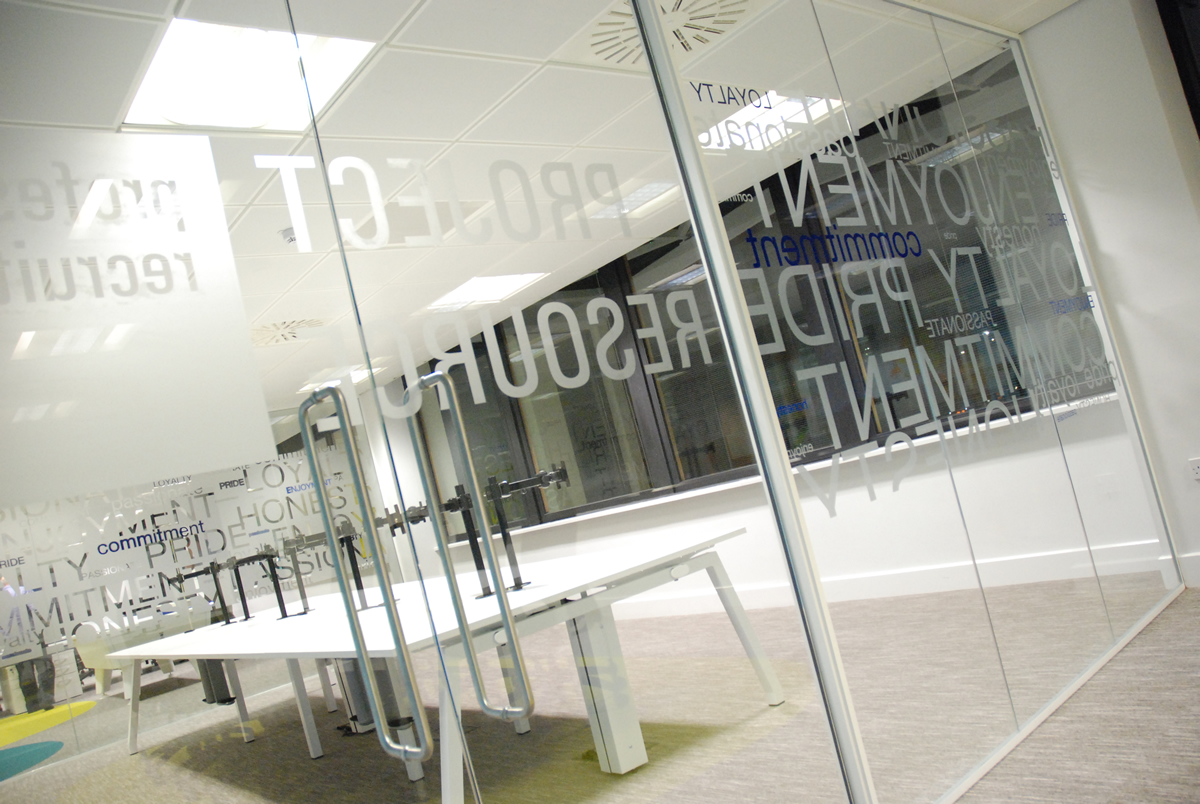
Glass walls are perfect for subtle brand expression. Frosted films, etched designs, or tinted glass can bring in company colours or logos without overpowering the space.
You can customise specific panels and leave others clear, adding visual interest while keeping the space bright. Graphics can mark meeting rooms, offer wayfinding, or reinforce brand values.
Privacy treatments are also design features—frosted sections at eye level keep things discreet but still let in light. Patterned glass brings texture and character.
Hardware matters, too. Door handles, hinges, and fixings come in finishes from brushed nickel to matte black, tying the look together with your other furnishings.
All these options let you create a cohesive design that reflects your brand while keeping the practical benefits of glass partitions intact.
First Impressions and Office Image
Your workspace says a lot to clients, partners, and potential hires before you even speak. Glass office partitions suggest transparency, modernity, and openness right away.
Visitors see a well-lit, spacious environment. The visual connection between areas hints at collaboration and accessibility—a big contrast to old-school solid walls that can feel closed off.
Glass partitions keep things professional without feeling fortress-like. Meeting rooms stay visible yet private. Private offices feel like part of the team, not cut off.
Quality materials make a difference. Well-installed frameless glass with clean edges and proper seals shows you care about detail. Smudge-free surfaces and tidy hardware say you’re invested in your space.
This polished look extends your brand beyond the logo—right into the day-to-day environment. Investing in quality glass walls shows you value both style and substance.
Safety and Regulatory Considerations
Glass partitions in UK offices have to meet fire safety standards, building regs, and durability requirements. These aren’t just hoops to jump through—they keep people safe and your business compliant.
Fire-Rated Glazing for Offices
Fire-rated glazing is a critical part of office safety. UK Building Regulations Part B calls for glass partitions to hit either FD30 or FD60 ratings, meaning they can withstand fire for 30 or 60 minutes.
That time buys safe evacuation during an emergency. The fire resistance depends on both the glass and the frame you use.
Standard glass partitions just won’t cut it in fire-risk zones. You’ll need specialised fire-rated glass with intumescent interlayers—these swell up in heat to block flames and smoke.
As always, installation quality is key. Even the best fire-rated glass won’t work if it’s fitted badly, so professional installation is a must for certified fire performance.
Compliance with Building Standards
Your glass partitions need to comply with several parts of UK Building Regulations. Part K is about protection from falling and collision, so you’ll need manifestation marks on glazing at eye level to prevent accidents.
Part N covers safety in critical spots—doors and low-level panels—meaning safety glass (toughened or laminated) is required to reduce injury risk if it breaks.
Part L deals with thermal performance. Sometimes, double-glazed partitions are needed to meet energy efficiency targets.
If you don’t comply, you could face fines, legal trouble, and insurance headaches. Building control needs to sign off on your specs before you start, especially for structural changes or fire compartmentation.
Security and Durability Aspects
Toughened glass is about five times stronger than standard glass and, if it breaks, it shatters into small, less dangerous pieces. Laminated glass adds another layer of security by holding fragments together after impact.
Modern glass partition walls stand up well to daily office life. They don’t dent, scratch easily, or wear out like older materials.
Acoustic performance can vary a lot. Single-glazed partitions are okay for basic sound reduction, but double-glazed units are the go-to for serious noise control in meeting rooms and private offices.
The thickness and makeup of your glass matter for both security and acoustics. Go thicker (10-12mm) for better sound insulation and more resistance to forced entry compared to the standard 6mm stuff.
Sustainability, Cost Effectiveness, and Maintenance
Glass partitioning brings real advantages in three big areas: environmental impact, cost, and daily upkeep. These benefits stick around long after installation, adding value year after year.
Longevity and Recyclability of Glass Materials
Glass partitions are made from tempered or laminated glass that holds up for decades. Unlike drywall or timber panels, which tend to wear out, good quality glass resists everyday office knocks, fading, and most typical damage.
When you eventually need to change your office layout—or if the partition’s time is up—the glass can be fully recycled without any loss in quality. That fits right into circular economy thinking and helps cut down on construction waste. These days, plenty of manufacturers even use recycled glass in their products, which only shrinks the environmental footprint further.
Demountable partitioning systems take sustainability a step further. You can move these systems around and reconfigure them as many times as you need, without the material breaking down. One investment in glass partitions can serve several office layouts over the years, so you’re not stuck buying new materials every time you rearrange.
Reducing Long-Term Operational Costs
Glass partitions let natural light reach further into your workspace, which can noticeably cut electricity bills. Offices that use daylight well typically need fewer artificial lights during the day, sometimes slashing energy costs by 20-30% in standard setups.
When it comes to reconfiguring your space, glass partitions are easier and faster to move than traditional walls. Installers can shift demountable systems in a matter of hours, so you spend less on labour and experience less business disruption. No need for plastering, painting, or hauling away debris like you would with solid walls.
Modern glass also helps distribute heat more evenly, so your heating and cooling systems don’t have to work as hard. That means lower HVAC costs and more comfortable working conditions, no matter the season.
Easy Upkeep and Cleaning
Glass partitions are pretty low maintenance compared to painted walls or fabric panels. Cleaning is straightforward—just a wipe-down with glass cleaner and a microfibre cloth, something your usual cleaning staff can handle during their routine.
You won’t be dealing with repainting, patching holes, or swapping out damaged sections like you would with traditional partitions. Most scratches and marks come right off glass surfaces. Plus, high-quality glass shrugs off stains, moisture, and even bacterial growth, so it keeps looking sharp with minimal effort.
Frameless glass walls are even simpler—no joints, seals, or metal frames to gather dust or need replacing down the line. That means lower maintenance costs and less downtime for cleaning or repairs.
Frequently Asked Questions
Glass partitions tend to spark a lot of questions—about light, acoustics, cost, safety, you name it. Knowing how these systems actually work in the real world can help you make smarter choices for your office.
How do glass partitions affect natural light and overall workplace wellbeing?
Glass partitions let daylight move freely through your office. Unlike solid walls that just block light, glass systems help sunlight reach deeper inside, so you can rely less on artificial lighting during the day.
People genuinely feel better in naturally lit spaces. There’s plenty of evidence showing that regular daylight exposure boosts alertness and helps regulate mood. Workers in these environments usually report higher satisfaction and fewer sleep issues.
And since glass is see-through, it also helps people feel less boxed in. Being able to see colleagues and movement around you creates a sense of connection, even if you’re working in your own area.
Do glass partitions provide sufficient acoustic privacy for calls and focused work?
The soundproofing you get from glass partitions really depends on the system. Single-glazed setups offer some sound reduction—enough for most general office use and everyday conversations.
Double-glazed partitions step it up with better acoustic insulation. These have a gap between panes that helps block more noise, making them a solid pick for meeting rooms or spaces where you need things to stay private.
If you need serious sound reduction, look at high-performance systems with thicker profiles (like 54mm or 100mm). The thicker and wider the partition, the better it handles noise—ideal for boardrooms or offices next to busy areas.
What are the main drawbacks or limitations of using glass partition walls in an office?
Glass partitions don’t offer as much visual privacy as solid walls. Even with frosted or tinted glass, you can usually see outlines and movement. If you need complete privacy, you might have to add blinds or switchable glass tech.
The upfront cost of glass systems is usually higher than basic drywall. Frameless and double-glazed options especially come with a steeper price tag. Still, the gap often narrows over time, since you get more flexibility and reusability.
Keeping glass looking good does take regular cleaning. Smudges, fingerprints, and dust show up fast, so you’ll need a routine to keep things professional.
Some folks may feel a bit exposed in glass-heavy offices. Constant visibility isn’t for everyone, so it’s worth thinking about adding fully private areas alongside your glass partitions.
How do glass partitions compare with solid walls in terms of cost, flexibility, and installation time?
Generally, glass partition systems cost more per metre than drywall. The materials and the need for specialist installers push up the price, especially if you go for frameless or double-glazed types.
Installation speed is a plus, though. Demountable glass partitions can often be put in place much faster than traditional walls—no plastering, no painting, no waiting for things to dry. Sometimes, the work can even happen outside regular office hours to avoid disruption.
The real draw is flexibility. Demountable glass partitions can be reconfigured, relocated, or expanded whenever you need, without major construction. With traditional walls, you’re looking at demolition, rebuilding, and a lot more mess and downtime.
Worth noting: glass partitions might qualify for capital allowances under UK tax rules, which can make a difference to your ROI. It’s a good idea to check with your accountant to see if you’re eligible.
What types of glass partition systems are best suited to different office layouts and team needs?
Frameless systems are perfect if you want a really open, modern feel. They keep the look clean and minimal, dividing up space without breaking up sightlines. Creative agencies, design studios, and anyone after a contemporary vibe tend to love these.
Framed systems give you a more industrial look, with visible aluminium or steel frames. The frames add support and let you use different glass thicknesses. They work well in offices with a modern or industrial style.
Single-glazed partitions are your go-to for cost-effective separation in open-plan areas. They’re great when you just need a visual divide, not heavy-duty soundproofing—think dividing up workstations or setting up informal meeting spots.
Double-glazed systems are for spaces where sound control matters. Meeting rooms, private offices, and quiet zones all benefit from the extra insulation. The 54mm profile is a popular choice for balancing performance and cost in most offices.
Fire-rated glazing is a must if building regs call for fire resistance. These systems protect escape routes and help compartmentalise spaces, all while keeping that transparent look. Your building control officer will let you know exactly where these are needed.
What safety, compliance, and maintenance considerations should be assessed before specifying glass partitions?
Glass partitions have to use safety glass that meets UK building regulations. Toughened glass is the go-to for most projects since, if it breaks, it shatters into those small, less hazardous pieces. Laminated glass is another option—it’s a bit more secure since even when it cracks, the fragments stay put.
Fire-rated systems need proper certification to show they actually meet resistance standards. You’ll want to see documentation that proves the system can handle fire for the rated period. Installation has to follow the manufacturer’s instructions to the letter—otherwise, that certification doesn’t mean much.
Your partitions need solid structural support. The floor has to be level and able to handle the weight of the glass panels. Ceiling connections need strong fixing points, too. It’s smart to get a professional to check that your building can actually support the system you want.
Keeping things clean matters for both looks and hygiene. Use cleaning products that won’t mess up any coatings or films on the glass. How often you clean really depends on your office and how much use the partitions get.
Door hardware and seals should get checked now and then. Hinges, handles, and acoustic seals do wear out eventually. Swapping out worn parts quickly helps keep everything working—and safe. Most manufacturers offer maintenance packages if you want a less hands-on approach.