The Coronavirus pandemic was the catalyst in the birth of a new era of hybrid workspaces, combining the best of remote and in-person work and incorporating them into the principles of contemporary office design.
While remote work has become increasingly popular in recent years, it has become apparent that the most productive and successful companies will be those that can create a high-functioning hybrid office space.
We’re exploring the key considerations for creating an effective hybrid office space in 2023 that are worth of some though when planning an office refurbishment.
Clear Communication
One of the most important factors in creating a high-functioning hybrid office space is the need for clear communication.
Employees who work remotely should be able to communicate with those who are physically present in the office, and vice versa. This requires a range of communication tools, including video conferencing software, instant messaging, and project management software. The aim is to create a seamless flow of communication between all team members, regardless of their location.
Flexibility in and out of the office
Another key consideration is the need for flexible workspaces. A hybrid office space should be designed to accommodate different working styles and preferences. Some employees may prefer to work in a quiet, private space, while others may thrive in a more collaborative environment. By providing a range of flexible workspaces, companies can ensure that all employees have access to a workspace that suits their needs and maximises their productivity.
Sound Technology
Technology is another critical factor in creating a high-functioning hybrid office space. All employees should have access to the same technology, regardless of whether they are working remotely or in-person. This includes access to high-speed internet, cloud-based storage solutions, and secure file sharing systems. The aim is to ensure that all team members can work seamlessly together, regardless of their physical location.
The Perfect Layout
To create a high-functioning hybrid office space, it is also important to consider the physical layout of the workspace.
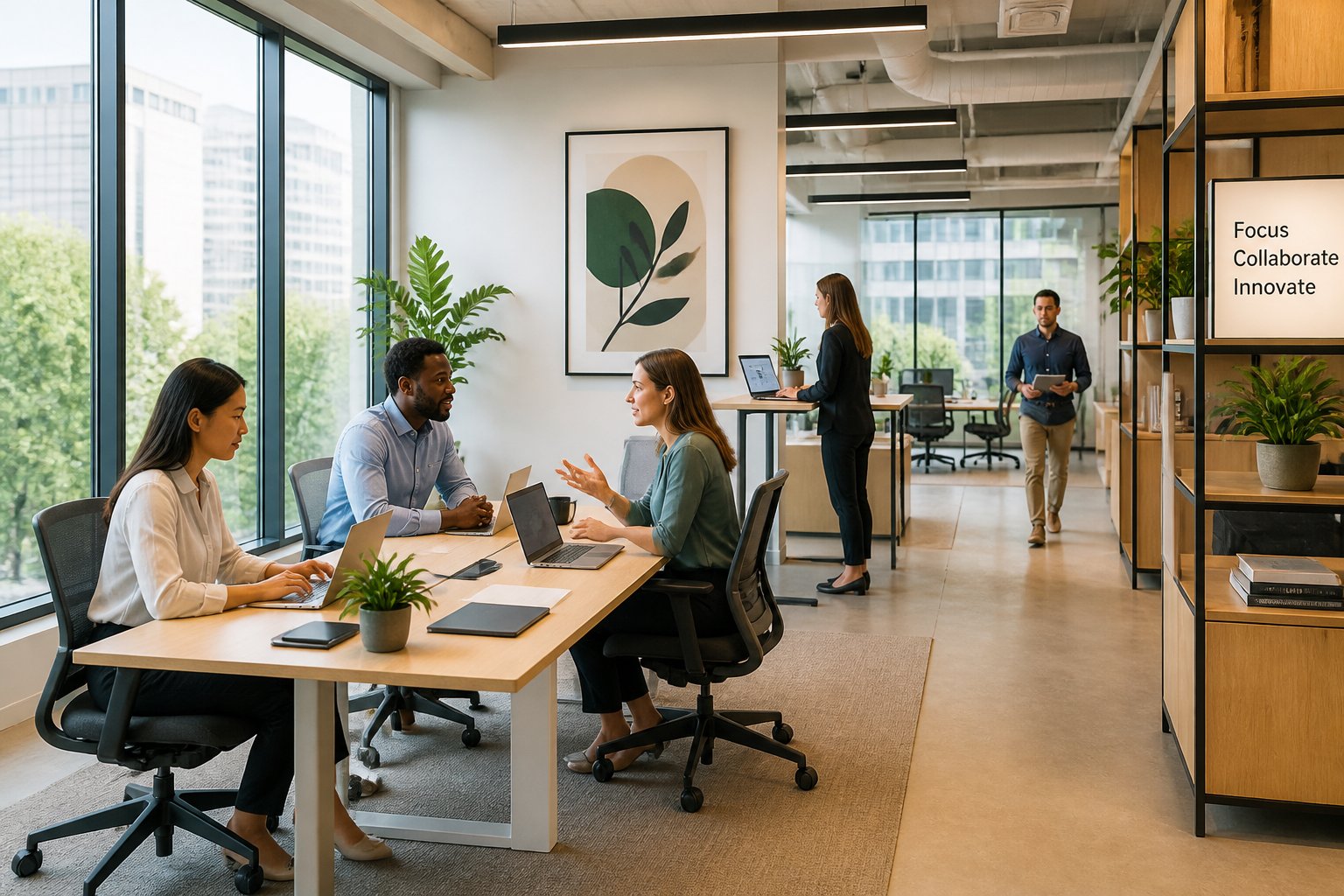
The office should be designed to promote collaboration and creativity, while also providing opportunities for privacy and concentration which can be achieved by the use of open plan workspaces, private meeting rooms, and designated quiet zones.
Creating a culture
A hybrid office space can create a sense of disconnection and isolation among team members, particularly for those who work remotely.
To combat this, companies must focus on building a strong sense of community and culture. This can involve regular team-building activities, social events, and clear communication about company values and goals.
In addition, companies should consider implementing flexible working hours to accommodate the needs of their employees. Some employees may prefer to work in the office during traditional working hours, while others may prefer to work outside of these hours. By offering flexible working hours, companies can create a more productive and engaged workforce.
Be Proactive
Finally, companies should be proactive in addressing the challenges that may arise in a hybrid office space. This includes providing training and support for employees to ensure they have the necessary skills to work effectively in a hybrid environment. It may also involve providing mental health support to employees who may struggle with the isolation of remote work.
In conclusion, creating a high-functioning hybrid office space requires a lot of thought and innovation so that companies can create a workspace that maximises productivity, engagement, and creativity, while also promoting a strong sense of community and connection among team members.
The key to success is to remain flexible and adaptable, constantly reviewing and refining the hybrid office space to ensure it meets the evolving needs of the workforce.